
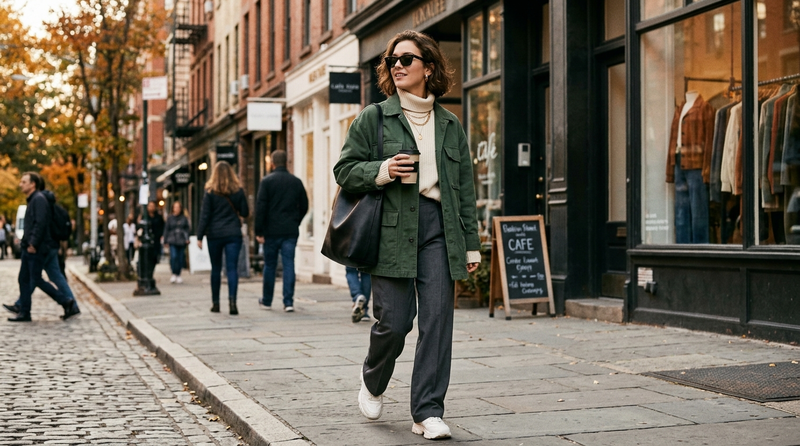
Buying Less, Looking Better: The Smart Guide to Intentional Fashion
Most of us stare at a full closet every morning and think, “I have absolutely nothing to wear.” We buy things on impulse, chase rapid micro-trends, and end up with a collection of random clothes that refuse to talk to each other.
Fashion shouldn’t feel like a chore or a stressful math problem. True style is about editing down the noise so your clothes actually work for your life, your body, and your morning routine.
1. Fashion Psychology: Building the Foundations of Personal Style
Fashion is often dismissed as something superficial. However, what you put on your body changes how you show up in the world. Your style communicates your values, boundaries, and confidence before you ever open your mouth.
1.1 The Anatomy of an Identity-Driven Wardrobe
Every great closet starts with rigorous self-awareness. Instead of blindly copying what you see on social media feeds, you need to understand your unique style archetypes. Are you a modern classic, a creative bohemian, or an ultra-sleek minimalist?
Once you pinpoint your personal vibe, you can use basic color theory to choose shades that make your skin look alive rather than washed out. Many highly successful people bypass morning stress entirely by adopting a strategy called uniform dressing. By building a reliable, go-to formula—like a great pair of dark-wash jeans paired with a sharp blazer—you create an authentic style that feels entirely like you, rather than a costume.
1.2 The Enclothed Cognition Effect: How Garments Shape Mindset
Scientists call it “enclothed cognition,” but you probably know it on the street as dopamine dressing. The clothes we wear have a direct, measurable impact on our everyday psychology.
Slipping into a well-tailored jacket or a structured pair of boots can instantly spike your wardrobe confidence and improve your posture. On the flip side, soft, premium knitwear offers genuine psychological comfort on high-stress days. Your clothes are an emotional toolkit. Choosing pieces that make you feel capable isn’t vain—it is practical self-care.
2. The Intentional Closet: Curating Your Physical Collection
Once you understand the mindset behind your style, it is time to tackle the physical space. A chaotic closet guarantees a chaotic morning.
2.1 Decoupling Abundance from Utility: The Capsule Wardrobe Philosophy
Many people think that having endless options means having a massive wardrobe. In reality, sheer abundance often paralyzes us. The capsule wardrobe philosophy solves this by shifting your focus to fewer, higher-quality items.
By investing in clean, interchangeable basics—like a crisp white button-down, a perfectly tailored pair of neutral trousers, and a versatile trench coat—you unlock dozens of outfit combinations. The real secret lies in collecting multi-season layers. These pieces allow you to transition your look from summer to winter smoothly without buying a completely new wardrobe every six months. This is the heart of a truly functional, minimalist style.
2.2 The Art of Closet Auditing and Organization
A proper closet audit is brutal but necessary. It requires you to look at your clothes objectively and ask if they actually serve your current life.
To make this painless, here is a quick 3-step reality check to help you weed out the clutter:
- The Ex-Factor Test: If you accidentally ran into your ex at a local coffee shop, would you want to be caught dead wearing this item? If the answer is a horrified “no,” it goes straight to the donation bin.
- The “Fits the Fantasy” Check: Stop saving clothes for a life you don’t actually live. If you bought an intricate silk evening gown but your weekends consist of walking the dog and ordering takeout, let it go.
- The Comfort Truth: If a garment pinches your skin, scratches your neck, or requires you to hold your breath for three hours, it is not fashion—it is a textile prison sentence.
Effective closet decluttering isn’t just about throwing things away. It is about implementing smart garment storage and proper fabric care. Utilizing a seasonal wardrobe rotation keeps your current-season clothes front and center. This gives your heavy garments room to breathe on the rack and dramatically extends their lifespan.
3. Sartorial Economics: Professional Dress and Smart Spending
Understanding your style psychology and cleaning out your closet are great first steps, but fashion eventually collides with your bank account. Managing your wardrobe budget doesn’t mean you have to skip your favorite foods or live like a monk. It just means you need to stop treating shopping like an emotional sport.
3.1 The Hybrid Workplace: Redefining Professional Dressing
The corporate uniform used to be incredibly straightforward: a dark suit, a crisp tie, or a structured skirt set. Today, the lines are completely blurred. The rise of hybrid schedules means we have to master business casual all over again, but with a highly modern twist.
Modern workplace dressing prioritizes relaxed tailoring.. Source: Ivan Pantic / Getty Images
The secret to modern corporate style is relaxed tailoring. You want structured blazers made from breathable, soft fabrics and trousers that offer a clean silhouette without cutting off your circulation. We also can’t ignore the realities of zoom dressing—the art of looking highly competent from the chest up while wearing hidden sweatpants.
True power dressing isn’t about wearing the most expensive outfit in the boardroom anymore. It is about choosing clothes that fit perfectly, let you move freely, and make you look like you know exactly what you are doing.
3.2 The Value-Per-Wear Formula: Cost-Conscious Fashion Choices
If you want to save serious money on clothes, you have to throw away the price tag mental trap. A cheap shirt is not actually cheap if it shrinks in the wash after two weeks and ends up at the bottom of a landfill.
To break this cycle, you need to use a simple math equation: the price-per-wear calculation. Take the price of an item and divide it by the number of times you will realistically wear it.
Here is a quick look at how the math actually plays out over a year:
- The Fast Fashion Trap: You buy a $30 synthetic dress for a single weekend party. You wear it exactly once, the seams split in the laundry, and you never touch it again. Price-per-wear: $30.00.
- The Smart Investment: You spend $150 on a premium pair of boots. You wear them three times a week for an entire year (roughly 150 times). Price-per-wear: $1.00.
When you shift your focus to high-quality fashion investment pieces, you are buying textile durability. Look for premium, high-quality textiles like heavy cotton, real wool, and sturdy linen. These fabrics can withstand real life, regular washing, and the test of time.
4. Conscious Expression: Navigating Trends and Sustainability
Building a great wardrobe also means looking at the bigger picture outside your personal bedroom mirror. The global clothing industry has a massive environmental footprint, and the way we shop makes a huge difference.
4.1 Deconstructing Fast Fashion vs. Slow Fashion Movement
Fast fashion brands rely on high-volume production and incredibly cheap labor to push out millions of new clothing designs every single month. The alternative is the slow fashion movement, which focuses on building a clean, circular fashion system.
Choosing organic, circular fabrics extends your wardrobe’s lifespan.. Source: Andrii Zastrozhnov / Getty Images
When you shop intentionally, look for brands that utilize sustainable textiles like Tencel, organic hemp, or recycled wool. Many independent designers are also finding innovative ways to use deadstock fabric—high-quality leftover materials from luxury design houses that would otherwise go to waste. Investing your money into ethical garments ensures that the people making your clothes are paid a fair wage and working in safe conditions.
4.2 Curating Trends Without Losing Your Core Identity
Choosing sustainability doesn’t mean your style has to become incredibly boring or plain. You can still participate in seasonal shifts without letting fast-moving micro-trends completely hijack your closet.
The trick is to use the 80/20 rule. Keep 80% of your wardrobe dedicated to your timeless basics and use the remaining 20% for fun, expressive statement pieces. If you want to experiment with a vintage look, try diving into vintage integration or local thrifting. Hunting through secondhand shops or online resale apps lets you score unique, high-quality pieces at a fraction of the retail price while keeping perfectly good clothes in active rotation.
Conclusion & The Look Forward
At the end of the day, fashion isn’t about rules, restrictions, or keeping up with billionaires on the internet. True style is an ongoing edit. By taking care of your clothes, buying for quality, and dressing for the life you actually live, you build an effortless wardrobe that makes you look and feel incredibly sharp every single morning.